
Introduction
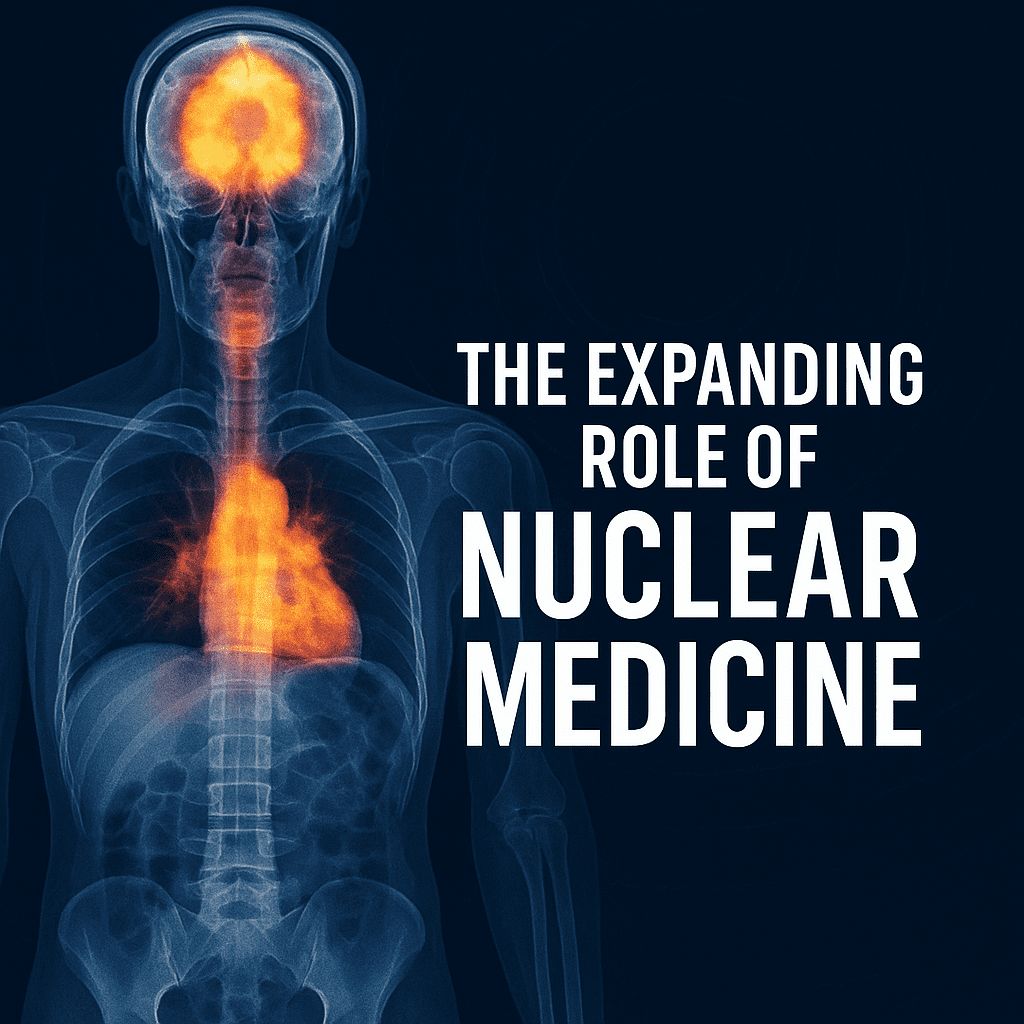
Modern medicine thrives on precision, and nuclear medicine stands at the crossroads of cutting-edge imaging and targeted therapy. Nuclear medicine was once seen primarily as a diagnostic specialty. It has now evolved into a dual force. It detects disease at its earliest stages and treats it with remarkable accuracy. From oncology and cardiology to neurology and endocrinology, its applications continue to broaden, offering hope to millions of patients worldwide.
Nuclear Medicine as a Precision Diagnostic Tool
At its heart, nuclear medicine provides functional imaging—a window into the body’s physiology that goes beyond structural detail. PET/CT, PET/MRI, and hybrid SPECT/CT scans give clinicians the ability to see metabolism, perfusion, and receptor expression. This often occurs before anatomical changes become obvious.
- Oncology: FDG PET/CT remains the gold standard for staging and response assessment in most cancers, while novel tracers (e.g., PSMA for prostate cancer, DOTATATE for neuroendocrine tumors) have reshaped the diagnostic landscape.
- Cardiology: Myocardial perfusion imaging and FDG PET in cardiac sarcoidosis guide management with evidence-based precision.
- Neurology: Amyloid and tau PET now play a pivotal role in evaluating dementia. They provide clinicians with insights that impact prognosis. They also influence therapeutic decisions.
Beyond Imaging: The Rise of Theranostics
The most revolutionary shift is the growth of theranostics—using one molecule for both diagnosis and treatment.
- Radioiodine (I-131): A pioneer in thyroid disease, still saving lives decades later.
- Lutetium-177 DOTATATE: Approved for neuroendocrine tumors, improving survival outcomes.
- Lutetium-177 PSMA: Transforming advanced prostate cancer management.
- Radium-223: Offering targeted therapy in metastatic prostate cancer with bone involvement.
These advances embody personalized medicine: treating what you see, and seeing what you treat.
Patient-Centered Care and Safety
Patients increasingly demand solutions that are accurate, minimally invasive, and safe. Nuclear medicine fulfills these expectations by:
- Reducing unnecessary biopsies through high diagnostic accuracy.
- Detecting disease earlier, when it is most treatable.
- Offering therapies with fewer systemic side effects compared to chemotherapy or surgery.
Radiation safety, once a concern, is continuously improved through international guidelines. Advanced dosimetry and innovative protocols also help reduce exposure. These advancements preserve image quality.
Training the Next Generation
As the field expands, so does the need for structured, evidence-based training. Future specialists must master not only the science of radiopharmaceuticals but also the art of clinical decision-making. Resources like the Masters of Nuclear Medicine series offer a structured, system-based approach to board preparation. They blend high-yield facts with board-style MCQs to build confidence. These resources guarantee exam success.
The Future of Nuclear Medicine
Artificial intelligence, quantitative imaging, and hybrid systems like total-body PET promise to take nuclear medicine to unprecedented levels. These advances will lead to:
- Faster, lower-dose scans.
- Automated, reproducible image analysis.
- Wider availability of theranostics for diverse cancers and chronic diseases.
The journey from diagnosis to therapy is now seamless, and nuclear medicine is at its center.
Conclusion & Call to Action
Nuclear medicine is no longer the hidden specialty—it is becoming the backbone of precision medicine. Its dual role in diagnosis and therapy offers unmatched benefits to patients and healthcare systems alike.
If you are a trainee, physician, or educator seeking to stay ahead, explore the Masters of Nuclear Medicine series. It offers a comprehensive, system-based review with high-yield insights. It also includes board-style MCQs designed to guide you toward exam and clinical success.
👉 Stay informed. Stay prepared. Be part of the nuclear medicine revolution.
